
Building Indigenous Women's Power Through L.A.C.E.
Four interconnected pillars — Leadership, Advocacy, Culture, and Education — guiding how Indigenous women build rights, sovereignty, and collective futures.
How We Work
Building Power, Advancing Change
PLUME works through two interconnected structures — the Alliance and the Institute — allowing us to advance Indigenous women’s rights from community to global arenas.
The Alliance builds collective power. We work alongside Indigenous women’s organizations, Tribal Nations, and grassroots leaders to strengthen voice, leadership, and coordinated action.
The Institute generates knowledge. We conduct research, develop policy, and provide technical assistance grounded in Indigenous knowledge systems, international law and treaties, and lived experience.
Together, these structures ensure that what comes from our communities informs law and policy — and that advocacy leads to real, lasting change for Indigenous women, our nations, and future generations.
Why This Works
When Indigenous Women Lead, Nations Heal.
The problem is structural. For generations, Indigenous women have been systematically excluded from the decision-making spaces that shape their lives — in tribal governance, in state or national policy, and in international law. Colonial systems have not just marginalized Indigenous women: they have actively suppressed the governance traditions that center their leadership.
The intervention is leadership infrastructure. PLUME builds the legal, political, and cultural conditions for Indigenous women's leadership to be exercised — not as an exception, but as the norm.
The outcome is sovereignty in practice. Not sovereignty as a legal concept waiting to be recognized — but sovereignty as Indigenous women governing their Nations, shaping national and international legal standards, and passing their knowledge to the next generation.
Where We Are Focused Now
PLUME's current programmatic priorities are organized around three converging opportunities:
-
A national education and advocacy campaign positioning GR39 as a self-determined legal pathway for Indigenous women's rights — without waiting for U.S. federal action.
-
Building training cohorts for Indigenous women and gender-diverse leaders to engage in tribal, local, national, and international policy arenas — including UN mechanisms such as the Permanent Forum on Indigenous Issues.
-
Building training cohorts for Indigenous women and gender-diverse leaders to engage in tribal, local, national, and international policy arenas — including UN mechanisms such as the Permanent Forum on Indigenous Issues.
Our Four Pillars
The L.A.C.E. framework reflects how Indigenous women have always organized — by weaving multiple forms of leadership, knowledge, and action into one strong structure. Each pillar is essential on its own. Together, they are transformative.
-
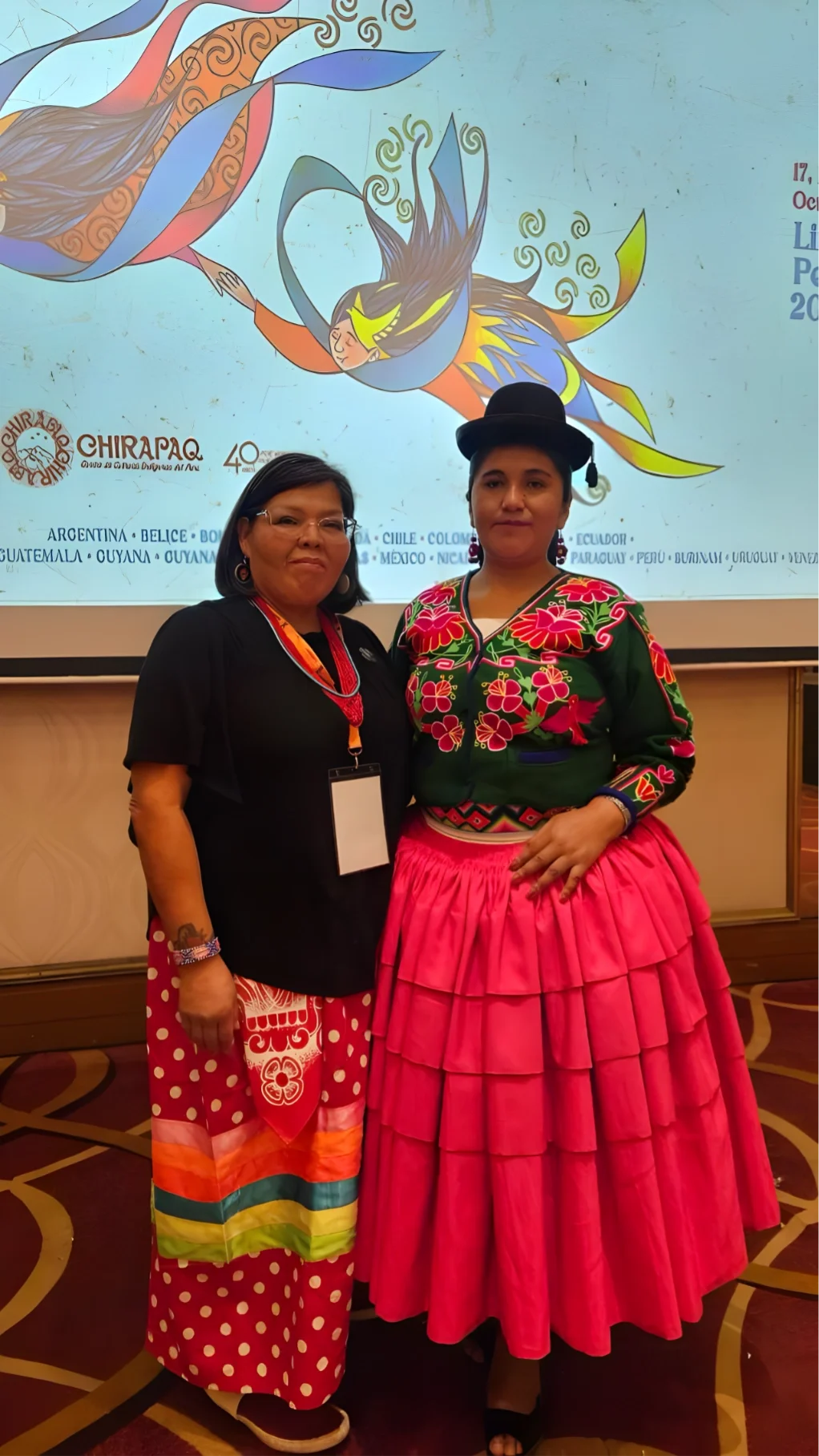
Strengthening Indigenous women's leadership across communities, institutions, and global spaces.
-
Indigenous women's leadership is not a program outcome — it is the foundation of everything PLUME builds. We support leadership rooted in lived experience, cultural responsibility, and collective governance: the kind that has sustained Indigenous Peoples through centuries of suppression and is essential to self-determination today.
-
— Leadership development and training cohorts for Indigenous women in policy arenas
— Support for Indigenous women in tribal governance and civic decision-making spaces
— Intergenerational knowledge-sharing rooted in Indigenous self-determination
— Engagement with international mechanisms, including the UN Permanent Forum on Indigenous Issues
-
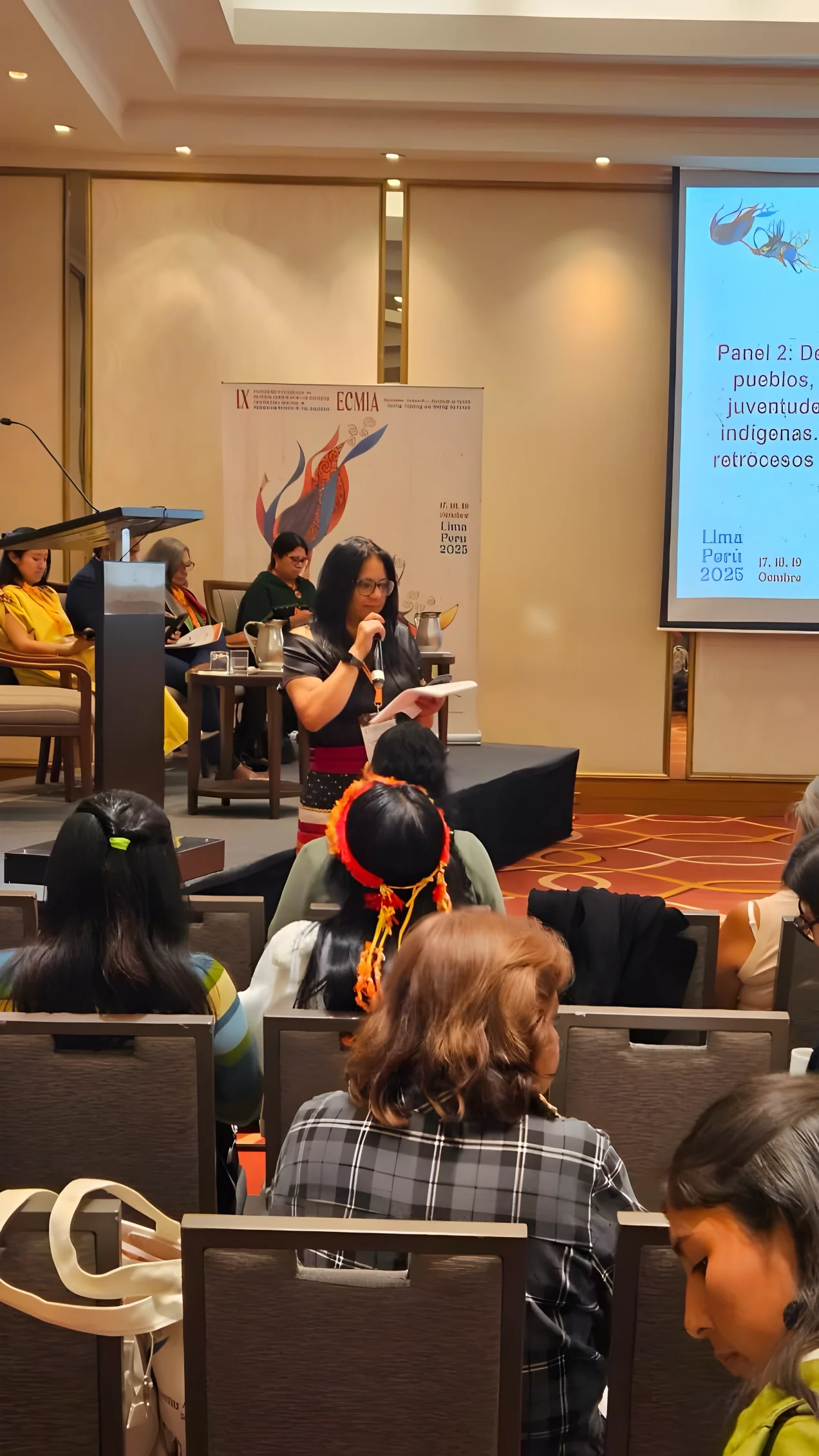
Advancing Indigenous women's rights through policy, legal frameworks, and collective action.
-
PLUME advances advocacy strategies that center Indigenous women's rights within local, national, and international human rights frameworks — integrating tools like UNDRIP, CEDAW GR39, and ILO 169 with Indigenous legal traditions, not as external standards imposed on communities, but as tools communities choose to wield on their own terms.
-
— Policy and legal advocacy in tribal, national, and international spaces
— Technical support for tribes and Indigenous organizations engaging human rights mechanisms
— Collective campaigns, public statements, and calls to action
— Human rights reporting and strategic litigation rooted in Indigenous legal traditions
-
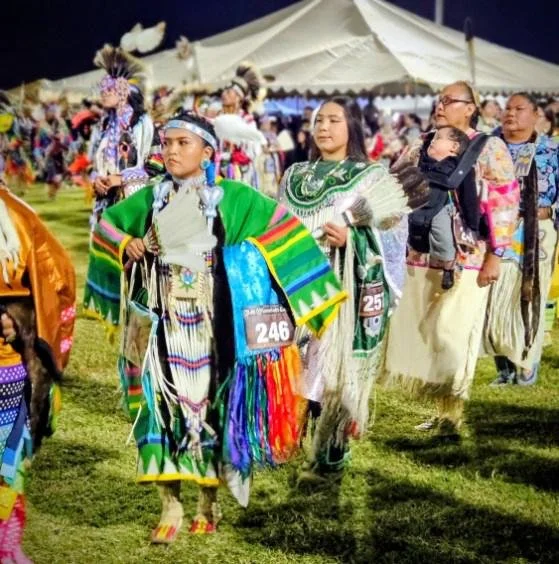
Centering rematriation as governance — not as symbol, but as law.
-
Before there were constitutions, there was ceremony. Before there were borders, there was land. PLUME centers rematriation — the restoration of Indigenous women's authority in governance, land stewardship, and the decisions that shape collective futures — as the foundation of everything we build.
Culture is not a program PLUME runs alongside its legal work. It is the ground from which the legal work grows.
-
— Land-based practices and intergenerational knowledge transfer led by Indigenous women
— Community-led cultural campaigns, ceremonies, and healing initiatives
— Re-centering matriarchal traditions in governance and spiritual authority
— Documenting and protecting Indigenous knowledge systems
-
Building knowledge, research, and narrative change led by Indigenous women.
-
Education is a tool for self-determination — but only when the knowledge it builds reflects the realities and priorities of the communities it serves. PLUME advances Indigenous-led education: research designed with communities, not about them; stories told by Indigenous women, not extracted from them; frameworks that shift power, not just awareness.
-
— Leadership development and training cohorts for Indigenous women in policy arenas
— Support for Indigenous women in tribal governance and civic decision-making spaces
— Indigenous-led research documenting the lived realities of Indigenous women in tribal and urban contexts
— Educational materials on GR39, UNDRIP, and Indigenous rights frameworks
— Storytelling and media strategies that amplify Indigenous women's solutions
— Narrative change initiatives designed to shift philanthropic and public understanding
Our Four Pillars
The L.A.C.E. framework reflects how Indigenous women have always organized — by weaving multiple forms of leadership, knowledge, and action into one strong structure. Each pillar is essential on its own. Together, they are transformative.
-
Strengthening Indigenous women's leadership across communities, institutions, and global spaces.
-
Indigenous women's leadership is not a program outcome — it is the foundation of everything PLUME builds. We support leadership rooted in lived experience, cultural responsibility, and collective governance: the kind that has sustained Indigenous Peoples through centuries of suppression and is essential to self-determination today.
-
— Leadership development and training cohorts for Indigenous women in policy arenas
— Support for Indigenous women in tribal governance and civic decision-making spaces
— Intergenerational knowledge-sharing rooted in Indigenous self-determination
— Engagement with international mechanisms, including the UN Permanent Forum on Indigenous Issues
-
Advancing Indigenous women's rights through policy, legal frameworks, and collective action.
-
PLUME advances advocacy strategies that center Indigenous women's rights within local, national, and international human rights frameworks — integrating tools like UNDRIP, CEDAW GR39, and ILO 169 with Indigenous legal traditions, not as external standards imposed on communities, but as tools communities choose to wield on their own terms.
-
— Policy and legal advocacy in tribal, national, and international spaces
— Technical support for tribes and Indigenous organizations engaging human rights mechanisms
— Collective campaigns, public statements, and calls to action
— Human rights reporting and strategic litigation rooted in Indigenous legal traditions
-
Centering rematriation as governance — not as symbol, but as law.
-
Before there were constitutions, there was ceremony. Before there were borders, there was land. PLUME centers rematriation — the restoration of Indigenous women's authority in governance, land stewardship, and the decisions that shape collective futures — as the foundation of everything we build.
Culture is not a program PLUME runs alongside its legal work. It is the ground from which the legal work grows.
-
— Land-based practices and intergenerational knowledge transfer led by Indigenous women
— Community-led cultural campaigns, ceremonies, and healing initiatives
— Re-centering matriarchal traditions in governance and spiritual authority
— Documenting and protecting Indigenous knowledge systems
-
Building knowledge, research, and narrative change led by Indigenous women.
-
Education is a tool for self-determination — but only when the knowledge it builds reflects the realities and priorities of the communities it serves. PLUME advances Indigenous-led education: research designed with communities, not about them; stories told by Indigenous women, not extracted from them; frameworks that shift power, not just awareness.
-
— Leadership development and training cohorts for Indigenous women in policy arenas
— Support for Indigenous women in tribal governance and civic decision-making spaces
— Indigenous-led research documenting the lived realities of Indigenous women in tribal and urban contexts
— Educational materials on GR39, UNDRIP, and Indigenous rights frameworks
— Storytelling and media strategies that amplify Indigenous women's solutions
— Narrative change initiatives designed to shift philanthropic and public understanding
Ready to go deeper?
Explore the tools, reports, and frameworks Indigenous women's movements actually use — built with communities, not about them.